Bearing Isolators for Pumps and Motors
Send shaft size, housing details, and photos. We help quote bearing isolators for pumps and motors.
About Bearing Isolators
A bearing isolator protects bearings by helping keep contamination out and lubricant in. It is often a non-contact or labyrinth-style sealing device, which means it does not wear the shaft like a standard lip seal. This can make it a more durable long-term option for equipment that runs frequently or is exposed to contamination.
Measurement Key
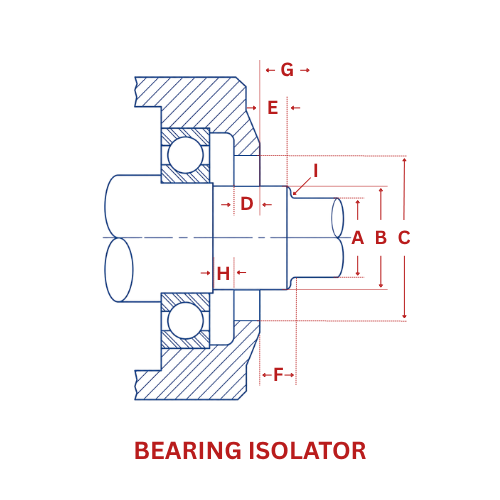
Choosing the Right Selection
Bearing isolator selection depends on shaft size, housing design, lubrication type, equipment orientation, and the environment the equipment operates in.
- Longer-Term Protection: Bearing isolators are often chosen when extended bearing life is important, especially in equipment with a history of bearing failures.
- Shaft Wear Concern: May be preferred over a standard lip seal where shaft wear from a contact seal has been a repeated issue.
- Lubrication Type: Oil bath, grease, and oil mist systems may require different isolator designs. Not every isolator fits every lubrication method.
- Contamination Risk: Dirty, wet, dusty, washdown, or outdoor environments may need more robust protection from contamination ingress.
- Equipment Orientation: Horizontal and vertical shaft orientations can affect which isolator design is appropriate.
What Changes the Selection
- •Equipment type: pump, motor, fan, gearbox, compressor
- •Shaft speed and diameter
- •Horizontal versus vertical orientation
- •Lubrication type: oil bath, grease, oil mist
- •Contamination risk: dust, water, washdown, outdoor
- •Bearing housing bore and available space
- •History of repeated lip seal or bearing failures
What Helps Us Quote It
Shaft diameter, OD, and width, housing type, equipment type and model, orientation, lubrication method, the environment the equipment operates in, photos of the existing seal or housing bore, and any part numbers or markings on the existing seal all help.
Related Categories
PumpSealsUSA helps maintenance teams, repair shops, municipalities, contractors, and industrial facilities across the United States identify and source replacement seals and pump parts.