Replacement Mechanical Seals for Pumps
Send photos, dimensions, a pump model, or an old part number. We help identify and quote replacement mechanical seals for pumps across the United States.
About Mechanical Seals
A mechanical seal uses two very flat faces to seal around a rotating shaft. The faces, elastomer, spring style, and seat design all work together. The factory seal may have been sized for clean water or a specific fluid. If the fluid, temperature, chemical exposure, or duty cycle has changed, a different material combination may perform better.
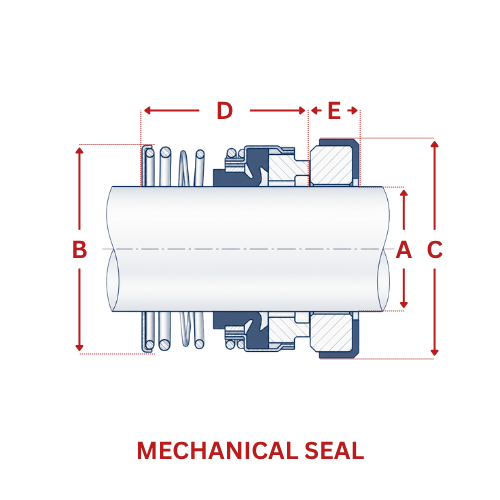
Identifying and Measuring a Mechanical Seal
Identifying a replacement mechanical seal usually starts with the shaft size, the seat OD, the seal style, and the face and elastomer materials. If you still have the old seal, photograph it next to a ruler and look for part numbers or markings on the faces or springs. If the old seal is gone, the pump brand, model, and fluid being pumped can still help us narrow down the right option.
Measurement Key
Choosing the Right Material
Mechanical seal material choice usually comes down to the face combination and the elastomer. The factory seal may be fine for clean water, but a better material may be needed for chemicals, hot water, wastewater, abrasive fluid, or dry running risk.
- Carbon Ceramic: Commonly used for general water service, light-duty applications, and standard pump service.
- Silicon Carbide: Often chosen for wastewater, abrasive fluids, tougher service, and where higher wear resistance is needed.
- Tungsten Carbide: Often used where durability, impact resistance, or higher loads are a factor.
- Viton FKM: Often chosen for oils, fuels, higher temperatures, and many chemical services.
- EPDM: Often used for water, steam, and some chemical applications. It is usually not ideal for petroleum oils.
- Buna N Nitrile: Common for oil and general industrial service. It may not be the best choice for high heat or aggressive chemicals.
- PTFE Teflon: Often used where chemical resistance is important. Material compatibility should be verified before final selection.
What Changes the Selection
- •Fluid or chemical being pumped
- •Temperature and temperature swings
- •Pressure and shaft speed
- •Abrasive solids in the fluid
- •Dry running risk during startup or low flow
- •Pump duty cycle: continuous, intermittent, or seasonal
- •History of repeated seal failures
What Helps Us Quote It
Shaft size, seat OD and thickness, seal style, face material, elastomer, pump brand and model, fluid, temperature, pressure, photos of the old seal, and any part numbers or markings on the seal faces or springs all help narrow down the right replacement.
Related Categories
PumpSealsUSA helps maintenance teams, repair shops, municipalities, contractors, and industrial facilities across the United States identify and source replacement seals and pump parts.